


Table of Contents
- What Clean Skincare for Sensitive Skin Actually Means
- Sensitive Skin Ingredients to Avoid
- Building a Gentle Skincare Routine for Sensitive Skin
- How to Patch Test Skincare Products Safely
- Best Skincare Products for Sensitive Skin
- Protecting and Balancing Your Skin Barrier
- When to Seek Professional Help
- Frequently Asked Questions
Last Updated: October 18, 2026
What Clean Skincare for Sensitive Skin Actually Means
Clean skincare for sensitive skin isn't just a marketing term, it's a deliberate approach to choosing products formulated with ingredients that respect your skin's natural defenses rather than overwhelm them. At rizzi by M, we define clean skincare for sensitive skin as products free from harsh chemicals, synthetic fragrances, and unnecessary additives.

The distinction matters because sensitive skin reacts to irritants differently than resilient skin does. When your skin is sensitive, even "gentle" products from other providers can cause redness, burning, or flaking if they contain sulfates, alcohol denat, or synthetic fragrance compounds. Clean skincare for sensitive skin prioritizes transparency, you know exactly what's going into your routine and why each ingredient is there.
What makes clean skincare for sensitive skin different from basic gentle products is intentionality. A truly clean formula removes the unnecessary while keeping the effective. This means no fillers, no masking fragrances, no preservatives chosen for cost rather than safety. The result is a skincare routine that delivers real hydration and protection.
Sensitive Skin Ingredients to Avoid
Most reactions to skincare come down to a handful of ingredient families, but the useful question isn't just "what's bad", it's how each one behaves on reactive skin, how it appears on a label, and what a realistic substitute looks like. Here's the ingredient-by-ingredient breakdown, with the caveats that matter.
Harsh sulfates. Sodium lauryl sulfate (SLS) and sodium laureth sulfate (SLES) are surfactants that lift oil and dirt by disrupting the skin's lipid barrier. SLS in particular is a known irritant in controlled patch-test settings, and it's the reason some "effective" cleansers leave sensitive skin tight and stinging (pubmed.ncbi.nlm.nih.gov).
Synthetic fragrance. "Fragrance" or "parfum" on a label is a legal catch-all that can stand in for dozens of undisclosed compounds, and fragrance mix is among the most frequently positive allergens in dermatology patch testing (Fragrance Contact Allergy - A Review Focusing on Patch Testing). Fragrance-free is not the same as unscented, "unscented" products can contain masking fragrance.
Alcohol denat (denatured alcohol). Listed as alcohol denat, SD alcohol, or ethanol, it appears in toners and essences as a solvent and quick-dry agent. At higher concentrations it strips lipids and can trigger rebound oiliness.
Preservatives. Phenoxyethanol and parabens are generally recognized as safe at cosmetic concentrations, but a minority of reactive skin types flare around them.
Essential oils and fragrant botanicals. Lavender, lemongrass, citrus peel oils, and peppermint are common "natural fragrance" choices and also common contact allergens, oxidized linalool and limonene in particular are well-documented sensitizers. Chamomile and calendula are traditionally calming, but "natural" is not the same as "non-irritating," and individual tolerance varies.
A practical shortcut: keep a running list of the specific ingredients that have caused reactions for you, and compare it against the full ingredient list, not the marketing bullets, before you buy.
Building a Gentle Skincare Routine for Sensitive Skin
A clean skincare routine for sensitive skin works best when you keep it simple, typically three to four products maximum. Overcomplicating your routine increases the risk of irritation and makes it harder to identify which product is causing a reaction if one occurs.
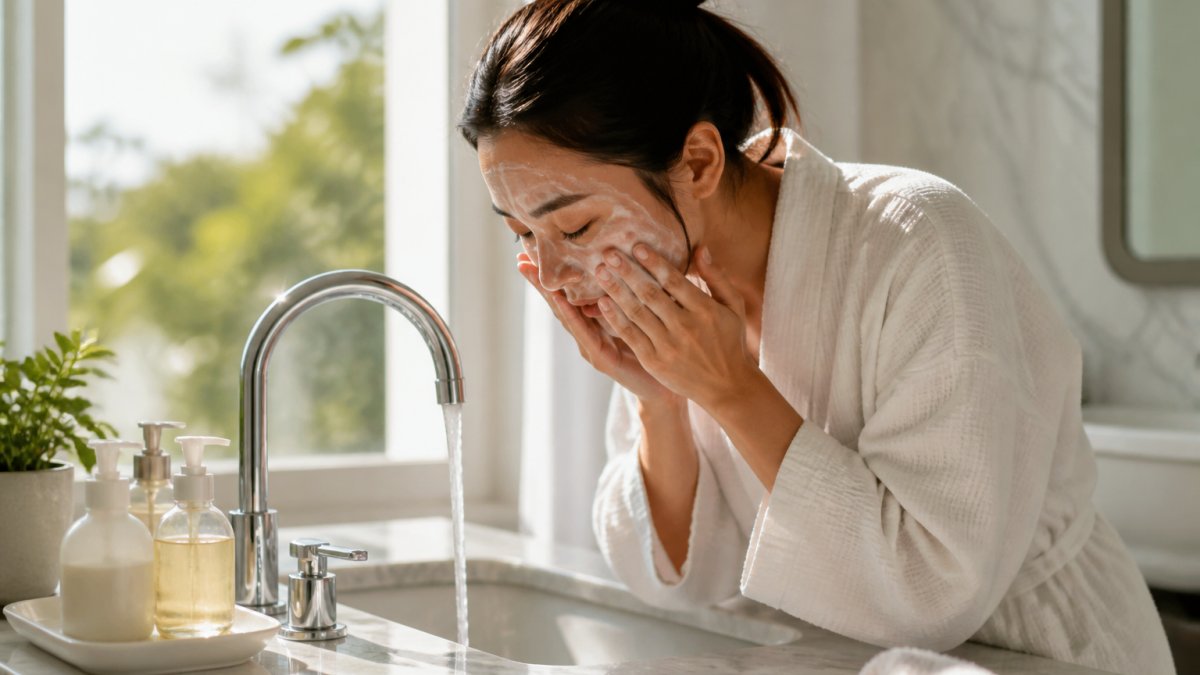
Morning Routine
Start with a fragrance-free cleanser designed for sensitive skin. The rizzi by M Sensitive Skin Face & Body Cleanser ($20.99) uses linden and jasmine flower extracts plus plum fruit extracts to cleanse without stripping. Apply to damp skin, rinse thoroughly, and pat dry gently, never rub.
Follow with a hydrating serum. The Bioactive Prebiotics Jelly Serum ($10.99) supports your skin barrier with prebiotics and hyaluronic acid, delivering lightweight hydration without heaviness. Apply to damp skin for better absorption.

Finish with a lightweight moisturizer if your skin feels dry. Morning routines for sensitive skin should feel minimal, cleanser, serum, and protection are typically enough before sunscreen.
Evening Routine
Begin with makeup removal if needed. The BiPhasic Make-up Remover, Fragrance Free ($18.99) combines oil and water phases to dissolve makeup gently without tugging or irritating. Shake well, apply to a cotton pad, and wipe gently across the face.
Follow with your cleanser again to remove any residue. This second cleanse ensures your skin is truly clean before treatment products.
Apply your serum while skin is still slightly damp. The Bioactive Prebiotics Jelly Serum or the Exosome & Niacinamide Serum ($22.99) both work well in the evening. The Exosome & Niacinamide Serum is particularly effective for addressing dullness and early signs of aging while still supporting your barrier with niacinamide and centella asiatica.
End with a richer moisturizer if your skin needs it. Evening is when your skin repairs itself, so slightly more hydration is appropriate.
How to Patch Test Skincare Products Safely
Introducing a new product to sensitive skin without testing is how most reactions happen, but "patch test" is often described so vaguely that it's hard to follow. Here's a concrete schedule, plus how to tell a passing irritation from a genuine allergy.
Step 1: Choose the test site. Use a small, inconspicuous area: behind the ear, the inner forearm, or along the jawline. The inner forearm is the most controlled site because it sees less sun and friction than the face.
Sensitive Skin Face & Body Cleanser →
Step 2: Apply a small amount once daily for three to five days. Use roughly the amount you'd apply to your full face, and leave it uncovered. Note any redness, itching, stinging, or swelling at 24, 48, and 72 hours, some reactions are delayed and won't show up on day one.
Step 3: Read the result correctly. Mild transient tingling that fades within minutes is common with some actives and isn't necessarily a fail. Persistent redness, raised bumps, burning that intensifies, or swelling is a stop signal, rinse with cool water and discontinue.
Step 4: Introduce to the full face gradually. If the patch test is clear, apply to a small area of the face (one cheek) for two to three days before using it on the whole face.
Step 5: Space out new additions. Add one new product at a time, roughly one to two weeks apart. This isolation method is the only reliable way to identify which product caused a reaction if one appears.
Irritation vs. allergy. Irritation is a direct response to a substance, it typically appears where the product was applied, stings or burns, and resolves within days of stopping. Allergic contact dermatitis is an immune response: it can spread beyond the application site, may take 24 to 72 hours to appear, and can worsen with each re-exposure. If a reaction spreads, blisters, or doesn't settle within a week of discontinuing the product, stop testing at home and see a dermatologist, who can perform patch testing to identify the specific allergen.
When to skip the DIY test and get help. If you have a known history of eczema, rosacea, or prior contact reactions, or if a reaction involves facial swelling or difficulty breathing, seek medical advice rather than continuing to experiment.
Best Skincare Products for Sensitive Skin
Clean skincare for sensitive skin requires products formulated specifically for reactive skin types. The best options combine gentle cleansing, barrier support, and soothing botanicals without unnecessary additives.
| Product | Type | Key Benefit | Price |
|---|---|---|---|
| Sensitive Skin Face & Body Cleanser | Cleanser | Maintains natural moisture, dermatologically tested | $20.99 |
| BiPhasic Make-up Remover, Fragrance Free | Makeup Remover | Gentle yet effective, fragrance-free | $18.99 |
| Bioactive Prebiotics Jelly Serum | Serum | Supports skin barrier, lightweight hydration | $10.99 |
| Exosome & Niacinamide Serum | Serum | Addresses dullness and aging, barrier-supporting | $22.99 |
The rizzi by M lineup is built specifically for sensitive skin concerns. Each product is dermatologically tested and formulated without harsh sulfates or synthetic fragrance.

Protecting and Balancing Your Skin Barrier
Your skin barrier is a protective layer that keeps irritants out and moisture in. When your barrier is compromised, from over-treating, using harsh products, or environmental stress, your skin becomes more sensitive to everything, including products that previously worked fine.
Signs of a damaged barrier include persistent dryness, increased sensitivity to products you've used before, and a tight, uncomfortable feeling even after moisturizing. If your barrier is compromised, simplify your routine immediately. Use only a gentle cleanser and a barrier-supporting serum or moisturizer for two to four weeks.
The Bioactive Prebiotics Jelly Serum is specifically formulated to strengthen a damaged barrier. Prebiotics support your skin's microbiome, while hyaluronic acid provides hydration. This serum is designed for barrier repair and can be used twice daily during the recovery phase.
Avoid active ingredients like acids, retinol, or vitamin C while your barrier is healing. These actives are irritating when your barrier is compromised and will delay recovery. Once your barrier feels stable, typically four to six weeks, you can gradually reintroduce other products.
When to Seek Professional Help
Sensitive skin and skin conditions like eczema or rosacea sometimes overlap, and distinguishing between them matters for treatment. If your skin shows signs of a condition beyond simple sensitivity, professional guidance becomes essential.
Seek dermatological advice if you experience persistent redness that doesn't improve with gentle products, severe itching or burning that affects daily life, visible scaling or flaking despite consistent moisturizing, or reactions that develop suddenly without product changes. These symptoms suggest an underlying condition that requires professional diagnosis.
A dermatologist can perform patch testing to identify specific ingredient sensitivities, recommend prescription-strength treatments if needed, and rule out conditions like rosacea, eczema, or contact dermatitis that require targeted care beyond over-the-counter clean skincare for sensitive skin.
Building a clean skincare routine for sensitive skin requires patience and intentionality, but the payoff is skin that feels calm, hydrated, and genuinely healthy. The challenge most people face is distinguishing between truly clean products and marketing claims. Start with a minimal routine using products formulated specifically for sensitive skin, like those from rizzi by M, and allow your skin barrier to stabilize before introducing anything new. The Sensitive Skin Face & Body Cleanser, Bioactive Prebiotics Jelly Serum, and BiPhasic Make-up Remover form a foundation that supports rather than stresses your skin. When your routine is this intentional, you'll notice the difference: more radiance, and skin that actually feels like it's healing rather than reacting.
Frequently Asked Questions
What makes clean skincare for sensitive skin different from regular skincare?
Clean skincare for sensitive skin eliminates harsh sulfates, synthetic fragrances, and unnecessary additives that trigger irritation. These formulas focus on soothing botanicals like chamomile and calendula, hydrating ingredients such as hyaluronic acid, and barrier-supporting components. The goal is to calm redness and inflammation while delivering results without compromise. Products like the Sensitive Skin Face & Body Cleanser ($20.99) demonstrate this approach, combining gentle cleansing with skin-soothing extracts.
How do you patch test skincare products to avoid reactions?
Apply a small amount of the product to a discrete area, such as behind your ear or on your inner arm, and wait 24-48 hours. Observe for redness, itching, burning, or swelling. If no reaction occurs, apply to a small facial area for another 24-48 hours before full use. Introduce one new product at a time, spacing additions by at least a week. This method helps identify problem ingredients before they affect your entire face.
Which ingredients should people with sensitive skin avoid?
Avoid harsh sulfates (SLS and SLES), synthetic fragrances, essential oils in high concentrations, alcohol denat, and strong chemical exfoliants like benzoyl peroxide. Many people with sensitive skin also react to dyes, parabens, and certain essential oils. Instead, look for fragrance-free formulations and products listing soothing ingredients like prebiotics, centella asiatica, and plant-based extracts. Always check ingredient lists and patch test before committing to a full routine.
How long does it take to see results from a clean skincare routine?
Most people notice reduced redness and improved comfort within 2-4 weeks of consistent use. Visible improvements in radiance, texture, and fine lines typically appear after 6-8 weeks as your skin barrier strengthens. Results depend on consistency, product choice, and individual skin response. Starting with a minimal routine and adding products slowly ensures you can identify what works for your specific skin without overwhelming it.