


Last Updated: November 5, 2026
Quick Summary
Gentle retinol alternatives for sensitive skin include bakuchiol, peptides, niacinamide, azelaic acid and gentler vitamin C derivatives. These ingredients aim for visible improvement with a lower chance of irritation than retinol, though results build gradually over several weeks.
- Bakuchiol is the most studied gentle option and is often named as a retinol substitute that won't sting.
- Niacinamide is one of the better-tolerated actives for reactive skin, though some people feel flushing or stinging.
- L-ascorbic acid is the most studied vitamin C form but is most likely to sting, especially above 10%.
- Patch test any new active on the inner forearm for three to five nights before applying it to your face.
- Give a new serum several weeks of consistent use before judging whether it works for you.
Table of Contents
- Why Retinol Irritates Sensitive Skin and What You Actually Need
- Bakuchiol Serum: The Most Studied Gentle Option
- Other Gentle Ingredients: Peptides, Niacinamide, Vitamin C and Lactic Acid
- Matching an Alternative to Your Skin Concern and Sensitivity Trigger
- Introducing a Retinol Alternative Safely: Patch Testing and Routine Compatibility
- Retinol Alternatives During Pregnancy, Breastfeeding and With Medical Conditions
- What Dermatologists Recommend and How to Set Realistic Expectations
- Building a Simple Sensitive-Skin Routine to Start This Week
- Frequently Asked Questions
Why Retinol Irritates Sensitive Skin and What You Actually Need
If your skin stings, flakes or turns red after using retinol, you are not alone, and many people go looking for retinol alternatives that are easier on their skin. Retinol is a vitamin A derivative that speeds cell turnover, and that same action can overwhelm a compromised skin barrier. For many people with sensitive skin, a gentler active that targets the same concerns may be the better route than pushing through irritation.
Retinol works by encouraging the skin to shed and renew faster. For reactive skin, that acceleration can trigger dryness, peeling and redness. The goal of a retinol alternative is to deliver visible improvement in fine lines, texture and tone with a lower chance of irritation.
The sections below walk through the ingredients that are most often recommended as gentle options, what each one does, and how to introduce them safely.
Bakuchiol Serum: The Most Studied Gentle Option
Bakuchiol is a plant-derived compound often described as a gentle retinol alternative. It is the ingredient most often named when people look for a retinol substitute that won't sting.
Our Natural Retinol Alternative Oil Serum pairs bakuchiol with rosehip seed oil. The listing describes it as formulated for mature, uneven, dull and dry skin. It is priced at $20.99 and $23.99 across two listings.

Bakuchiol is not identical to retinol, and it does not work through the same pathway. A common mistake is judging results after one or two weeks. Give a new serum several weeks of consistent use before deciding whether it works for you.
Watch out: applying a new active to broken or freshly irritated skin is the fastest way to misread a reaction. Wait until your skin feels calm before adding anything new.
Other Gentle Ingredients: Peptides, Niacinamide, Vitamin C and Lactic Acid
Bakuchiol gets most of the attention, but it is not the only option for reactive skin. The ingredients below work through different mechanisms, carry different levels of evidence, and suit different concerns.
Peptides are short amino acid chains that act as signaling molecules. Our Peptide Anti-Aging Serum (2% Hexapeptide-11 with 1% Ginkgo Biloba extract, $23.99) is positioned to support the look of firmer, smoother skin.

Niacinamide (vitamin B3) supports the skin barrier, helps regulate oil, and can improve the appearance of uneven tone.
Vitamin C is a well-established antioxidant that can brighten dullness and support collagen, but the form matters for sensitive skin.
Lactic acid is an alpha hydroxy acid (AHA) that exfoliates by loosening the bonds between dead surface cells.
Azelaic acid deserves a place on this list even though it is not in our current lineup.
A practical way to compare these options is by evidence quality and irritation risk. Niacinamide and azelaic acid have the most consistent human data for sensitive skin concerns. Peptides are promising but ingredient-specific.
Watch out: layering several of these ingredients in the same week is a common cause of irritation that gets misattributed to a single product.
The gentle actives covered above differ in evidence strength and irritation risk, as summarised below.
| Ingredient | Best for | Key caution |
|---|---|---|
| Peptides | Fine lines when irritation is the main concern | Evidence is ingredient-specific and results are gradual |
| Niacinamide | Uneven tone and reactive skin | Flushing or stinging in a minority at higher concentrations |
| Vitamin C (L-ascorbic acid) | Brightening dullness | Most likely to sting, especially above 10% |
| Vitamin C derivatives | Gentler vitamin C option | Generally weaker evidence for visible effects |
| Lactic acid | Surface texture | Still an exfoliant; use two or three nights per week at most |
| Azelaic acid | Redness and post-acne marks | Temporary tingling or dryness in the first few weeks |
Matching an Alternative to Your Skin Concern and Sensitivity Trigger
Sensitive skin is not one category. A person who flushes with redness has different needs from someone who is dry and flaky, and both differ from someone with acne-prone skin and post-inflammatory marks. The most useful way to choose a retinol alternative is to match the ingredient to both your primary concern and your specific sensitivity trigger.
Start with your primary concern:
Natural Retinol Alternative Oil Serum →
- Fine lines and firmness: Bakuchiol and peptides are the gentlest starting points. Bakuchiol has the most human data among plant-derived alternatives, though the evidence is still smaller than for retinoids. Peptides are well tolerated but tend to produce subtle, gradual changes.
- Uneven tone and dullness: Niacinamide is a strong first choice for reactive skin. A gentle AHA such as lactic acid can help with surface texture, but it is still an exfoliant, so introduce it slowly. Vitamin C can brighten, but choose a gentler derivative if L-ascorbic acid stings.
- Redness and flushing: Azelaic acid is often recommended for rosacea-related redness and is generally well tolerated. Keep the routine minimal and avoid fragrance and drying alcohols.
- Acne and post-acne marks: Azelaic acid and niacinamide are common choices. Avoid heavy occlusive oils if you are acne-prone, and do not stack exfoliating acids with acne treatments such as benzoyl peroxide or salicylic acid at first.
- Dehydration and a weakened barrier: Prioritize barrier-supporting hydration before adding any active. The Bioactive Prebiotics Jelly Serum ($10.99) is designed to support the skin's protective barrier and suits all skin types.
Now layer in your sensitivity trigger:
- Fragrance sensitivity: Choose fragrance-free formulas. Our Exosome & Niacinamide Serum is fragrance free. Fragrance is a common cause of skin reactions, so this is a reasonable first filter (the American Academy of Dermatology).
- Botanical oil reactions: Many gentle serums use seed oils as carriers. If you have reacted to oils before, patch test on the inner forearm before applying to the face. The Natural Retinol Alternative Oil Serum pairs bakuchiol with rosehip seed oil.
- Rosacea or easy flushing: Avoid strong acids and high-concentration vitamin C at first. Azelaic acid and niacinamide are usually better starting points, and a dermatologist can advise on prescription options.
- Eczema or a history of dermatitis: Keep the routine short and avoid exfoliating acids until the skin is stable. The Calming Facial Oil ($17.99, with 1% cannabidiol) is listed for dry and dull skin and can be mixed into your moisturiser.
- Acne-prone and reactive: Lightweight, non-comedogenic formulas matter more than the active itself. Niacinamide is often a better fit than rich oils.
A simple decision path helps. If redness is your main issue, start with azelaic acid or niacinamide. If fine lines are the priority and your skin reacts to everything, start with bakuchiol or peptides. If dullness and texture are the concern, niacinamide first, then a gentle AHA if your skin stays calm. If your barrier is compromised, pause actives and focus on hydration before choosing anything.
Watch out: choosing an ingredient based on a trend rather than your specific trigger is the most common reason a gentle alternative still causes irritation. Match the ingredient to the concern and the trigger, not to the marketing claim.
Introducing a Retinol Alternative Safely: Patch Testing and Routine Compatibility
Introduce any new active gradually. Pair it with a gentle, fragrance-free sensitive skin cleanser that keeps the skin's natural moisture balance intact. The safest approach is to patch test first. Apply a small amount to the inner forearm or behind the ear every night for three to five days, and watch for stinging, itching or redness.

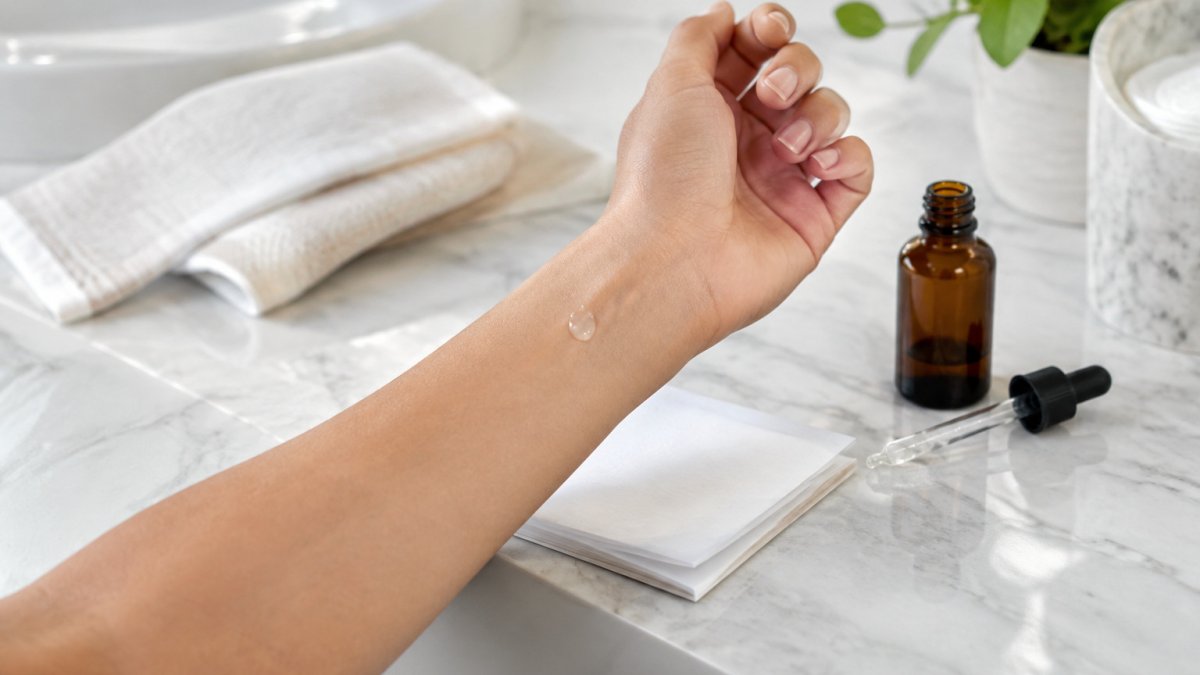
If the patch test goes well, start with two or three nights per week. Increase frequency only if your skin stays calm. Many people find that layering a new serum over a complex routine is what triggers trouble, so remove other strong actives while you adjust.
Routine compatibility also matters. Avoid stacking multiple exfoliating acids, vitamin C and strong actives in the same routine at first. A simple layering order works well: cleanser, a single active serum, moisturizer, and sunscreen in the morning.
Watch out: skipping sunscreen while using any active that increases cell turnover raises the risk of sun sensitivity and discoloration. Daily sunscreen is essential.
Retinol Alternatives During Pregnancy, Breastfeeding and With Medical Conditions
Pregnancy and breastfeeding change what is appropriate for your skin. People who are pregnant or breastfeeding should check with a qualified healthcare provider before using any new active, including plant-derived ones.
If you have a medical skin condition such as eczema, rosacea or a history of dermatitis, speak with a dermatologist before starting a new serum. Some ingredients that are gentle for most people may still provoke flares in others.
If you have already damaged your skin barrier from over-treating it, stop all actives for a period and focus on hydration and barrier repair. A dermatologist can help you decide when it is safe to reintroduce anything.
What Dermatologists Recommend and How to Set Realistic Expectations
Dermatologists generally recommend that people with sensitive skin start with a minimal routine, introduce one active at a time, and prioritize sun protection. Many also suggest that gentle alternatives produce gradual changes rather than dramatic ones.
Set realistic expectations. A retinol alternative will not deliver the same speed or intensity as prescription retinoids. Improvements in tone, texture and the look of fine lines tend to build over several weeks to months of consistent use.
If you are considering a prescription treatment or your skin is not improving after a reasonable trial, book an appointment with a dermatologist rather than adding more products.
Building a Simple Sensitive-Skin Routine to Start This Week
Here is a simple plan you can start this week:
- Cleanse with a gentle, fragrance-free cleanser in the morning and evening.
- Patch test your chosen serum for three to five nights.
- Apply the serum two or three nights per week, after cleansing and on dry skin.
- Moisturize with a barrier-supporting product, such as the Bioactive Prebiotics Jelly Serum.
- Wear sunscreen every morning.
Add a second active only after four to six weeks of stable results. Keep notes on how your skin responds so you can spot patterns.
Frequently Asked Questions
What is a gentle alternative to retinol for sensitive skin?
Bakuchiol is the most commonly recommended gentle alternative. It is a plant-derived compound that many people with reactive skin tolerate better than retinol, and it is often paired with rosehip seed oil in serums. Peptides and niacinamide are other low-irritation options. Results generally take several weeks to appear and are typically more modest than prescription retinoids, so set expectations accordingly. Start with a patch test before using any new serum on your face.
Is bakuchiol gentler than retinol for sensitive skin?
Bakuchiol is generally reported to cause less stinging, redness and peeling than retinol, which is why it is marketed to sensitive skin. However, it is not irritation-free, and individual reactions vary. The evidence base is smaller than for retinoids, and it does not produce identical results. Introduce it gradually, two or three nights a week at first, and stop if you notice persistent burning or redness.
Can I use retinol alternatives during pregnancy?
Many people choose to avoid active skincare ingredients during pregnancy and breastfeeding because safety data is limited for most of them. Retinoids are generally avoided in pregnancy, while the safety of bakuchiol has not been well studied in pregnant people. Check with your obstetrician or dermatologist before using any new active, and consider sticking to basic hydration and gentle cleansing in the meantime.
How do I introduce a retinol alternative into a sensitive-skin routine?
Patch test on the inner forearm or behind the ear for three to five days before applying to your face. Then use the product every other night for the first two weeks, applying it to dry skin after cleansing and before a moisturizer. Avoid combining it with strong exfoliating acids on the same night, and use sunscreen every morning, since skin can become more sensitive during the adjustment period.
If you're ready to try a gentle option, explore our Natural Retinol Alternative Oil Serum and Peptide Anti-Aging Serum. Start with a patch test, go slowly, and let your skin set the pace.
