


Quick Summary
Gentle hydration for aging skin means using a short routine of water-binding and barrier-supporting products, applied in a set order. Mature skin produces less oil and holds less water, so it needs fragrance-free formulas, one new product at a time, and a patch test before full use.
- Skin produces less oil and holds less water as the years pass, so it can feel tight or rough.
- Pat hyaluronic acid serum onto slightly damp skin right after cleansing.
- Apply thinner products first and give each layer 30 to 60 seconds to settle.
- Introduce one new product at a time and wait a week or two before adding another.
- Patch test new products on the inner forearm or behind the ear for three to five days.
Table of Contents
- Why Aging Skin Loses Moisture and Reacts Easily
- Dehydration, Dryness, or Irritation: How to Tell the Difference
- Choosing Gentle Hydrating Ingredients: Hyaluronic Acid, Ceramides, and Peptides
- A Step-by-Step Gentle Hydration Routine for Aging Skin
- Best Moisturizer for Aging Skin Over 60 and Over 70: What to Look For
- Adjusting Hydration for Seasons, Climate, and Sensitive Skin
- Gentle Hydration Reviews: What Users Report and Where Products Fit
- Booking Your Next Step: Start Simple and Add One Product at a Time
- Frequently Asked Questions
Why Aging Skin Loses Moisture and Reacts Easily
Gentle hydration for aging skin starts with understanding why mature skin changes. Skin produces less oil and holds less water as the years pass, so it can feel tight, rough, or itchy (the American Academy of Dermatology). Many adults over 40 notice that products they used for years now sting or leave a film. This guide is built around that shift, so you can keep your skin comfortable without overloading it.
Skin cells need water and lipids to stay smooth. The outer layer, the stratum corneum, works like a brick wall, with skin cells as bricks and lipids as mortar. Over time, that mortar thins, and water escapes more easily. American Academy of Dermatology overview of dry skin and the skin barrier
Several changes add up:
- Lower natural oil output, which leaves less protection on the surface
- Thinner skin, which makes irritation easier to notice
- Slower cell turnover, which can make skin look dull
- Weaker barrier function, so moisture escapes faster
Reactivity is the other part of the picture. A compromised barrier lets irritants reach deeper layers, which is why a product that felt fine at 35 may now cause redness.
Dehydration, Dryness, or Irritation: How to Tell the Difference
These three conditions look alike but need different responses. Dehydration is a lack of water in the skin. Dryness is a lack of oil. Irritation is inflammation from a product, weather, or friction. Treating the wrong one can make things worse.
Dehydrated skin often feels tight after cleansing, looks fine in the morning, then shows fine lines by afternoon. It can be oily and dry at once, since the skin produces extra oil to compensate for lost water.
Dry skin feels rough and flaky all day and does not improve much after applying water-based products. It usually needs richer emollients and lipids.
Irritated skin stings, burns, or turns red after a specific product or activity. It may also feel hot or itchy.
A simple test: apply a fragrance-free, water-based gel to clean skin. If tightness eases within a few minutes, dehydration is likely. If the skin still feels rough, add a richer cream. If stinging continues, stop all new products and simplify your routine.
Choosing Gentle Hydrating Ingredients: Hyaluronic Acid, Ceramides, and Peptides
Ingredient labels can be confusing, so focus on what each group does.
Hyaluronic acid is a humectant. It draws water into the upper skin layers. The Anti-Age Day Cream uses multi-molecular-weight hyaluronic acid, which means different molecule sizes work at different depths, a useful detail for layered hydration. National Center for Biotechnology Information review of hyaluronic acid in skincare
Ceramides are lipids that help rebuild the barrier. They are especially useful for aging or reactive skin because they replace what the skin loses naturally.
Peptides are short chains of amino acids. The Peptide Anti-Aging Serum contains 2% Hexapeptide-11, paired with 1% Ginkgo Biloba extract, and is designed to help diminish the appearance of fine lines.
Watch out: layering several strong actives at once can overwhelm sensitive skin. Introduce one new ingredient at a time, and wait at least a week before adding another.
A Step-by-Step Gentle Hydration Routine for Aging Skin
Keep the routine short. Three to four steps is enough for most people. What matters more than the number of products is the order you apply them in and the condition of your skin when each one goes on. Thin, watery layers go first; thicker, oilier layers go last. That sequence lets water-binding ingredients pull moisture in before heavier creams seal it down.
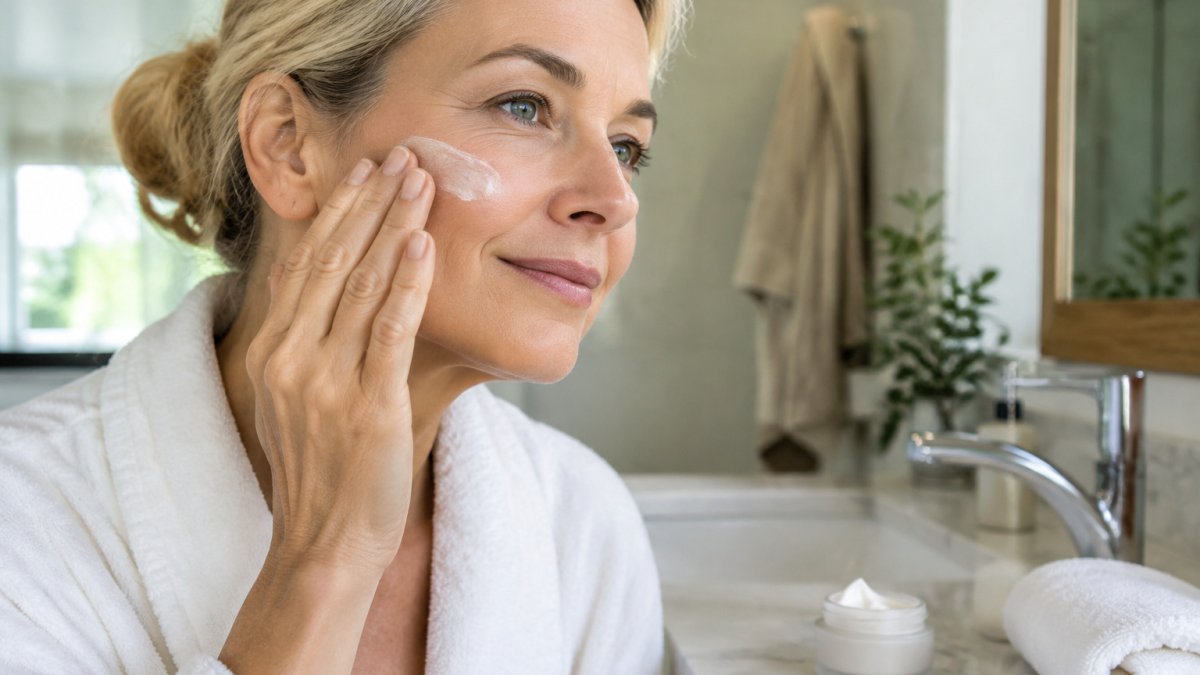
Morning Routine Order
- Rinse or use a gentle cleanser. Use lukewarm water, or a fragrance-free cleanser if your skin feels oily. Hot water strips lipids faster than most people expect, so keep it brief.
- Apply a hydrating essence or serum to damp skin. This is the step most routines get wrong. Pat the product onto skin that is still slightly wet from cleansing rather than waiting for it to dry completely. Humectants like hyaluronic acid need water to draw from; on bone-dry skin they can pull moisture from deeper layers instead and leave the surface feeling tighter.
- Use the Anti-Age Day Cream while the serum is still tacky. Apply it to clean skin, starting at the center of the face and moving outward. Pressing it over a still-damp serum layer traps that water rather than letting it evaporate.
- Finish with sunscreen. Hydration does not protect against UV damage, and UV exposure is one of the main drivers of the barrier thinning that makes aging skin reactive in the first place.
Evening Routine Order
- Cleanse gently. Remove makeup and sunscreen without scrubbing. If you wore a water-resistant sunscreen, a fragrance-free cleansing balm followed by a mild cleanser removes it with less friction than rubbing.
- Apply the Peptide Anti-Aging Serum to clean, slightly damp skin, then wait a minute before the next step. Waiting lets the serum absorb so the moisturizer sits on top rather than diluting it.
- Seal with a richer moisturizer to hold everything in place overnight. Night is when most people can tolerate the heaviest texture, since there is no makeup or sunscreen layered over it.
How to Layer Without Overloading
A common pattern is to add one product at a time and give it a week or two before adding the next. If you introduce a serum, a cream, and an eye product in the same week and your skin reacts, you will not know which one caused it. Apply the thinnest product first and give each layer 30 to 60 seconds to settle before the next.
Our practical tip: pat products in rather than rubbing. Friction stresses sensitive skin and can lift the barrier more than the product helps.
For a patch test before adding any new product, apply a small amount to the inner forearm or behind the ear for three to five days. Redness, itching, or burning means the product is not right for you.
Watch out: applying a hyaluronic acid serum to completely dry skin in a low-humidity room can leave skin feeling tighter rather than softer. If that happens, mist with plain water first or apply the serum immediately after cleansing.
The routine below breaks each step into a clear order, with timing and frequency you can follow.
| Step | What to do | Time or frequency |
|---|---|---|
| Cleanse | Use lukewarm water or a fragrance-free cleanser | Brief rinse, morning and evening |
| Hydrating serum | Pat onto slightly damp skin | Immediately after cleansing |
| Day cream | Apply while serum is still tacky | Morning |
| Sunscreen | Finish the morning routine | Every morning |
| Cleanse (evening) | Remove makeup and sunscreen without scrubbing | Evening |
| Peptide serum | Apply to clean, slightly damp skin, then wait a minute | Evening |
| Richer moisturizer | Seal everything in place overnight | Evening |
| New product | Introduce one at a time | Wait a week or two between additions |
Best Moisturizer for Aging Skin Over 60 and Over 70: What to Look For
Skin needs change with age, but the core criteria stay the same. Look for:
- Fragrance-free formulas, since fragrance is a common irritant for mature skin
- Humectants and emollients together, so water is drawn in and sealed
- Lightweight texture if you have oily patches, richer texture if you are dry
- Clear ingredient lists that show what each active is for
Our pick for daytime use is the Anti-Age Day Cream at $9.99. It suits people who want a velvety feel with hyaluronic acid and a marine active. For a complete peptide routine, the Anti-Age Peptide Gift Box at $69.99 bundles a serum, eye cream, and AM/PM cream. Explore the Anti-Age Day Cream to see how it fits a morning routine.

Adjusting Hydration for Seasons, Climate, and Sensitive Skin
Hydration needs shift with the weather, and the same cream that feels perfect in January can feel greasy in July. In dry air, water evaporates from the skin surface faster.
Winter and indoor heating. Cold outdoor air holds little moisture, and indoor heating dries it further. Many people notice tightness within an hour of sitting in a heated room.
Summer and high humidity. Use a lighter lotion or gel and reduce layers to avoid buildup. A water-based serum plus a light lotion is often enough during the day; save the richer cream for night.
Air conditioning and travel. Recycled air on planes and in offices is dry.
Sensitive skin. Consistency matters more than strength. Introduce one new product at a time and keep a simple baseline of cleanser, moisturizer, and sunscreen that you do not change. Shop the Sensitive Skin Body Cream for a gentle option on drier areas like elbows, knees, and legs.

When you use retinoids or exfoliating acids. These actives speed up cell turnover and can thin the barrier temporarily, so skin needs more hydration and less frequent use while it adjusts.
Gentle Hydration Reviews: What Users Report and Where Products Fit
Reviews vary, and not every report reflects typical results. These experiences are useful for matching a product to your climate and skin type, but they are not a guarantee of results.
Read reviews for patterns: consistent comments about texture, irritation, or long-term comfort tell you more than a single five-star rating. For a short list of options, see the Anti-Age Peptide Gift Box if you want a full routine rather than a single product.
Booking Your Next Step: Start Simple and Add One Product at a Time
Gentle hydration works best when you build it slowly. Start with one cleanser and one moisturizer for two weeks. If your skin feels calm, add a serum. Introduce the new step only after your skin settles.
If you are looking for guidance on where to buy a gentle daily moisturizer, start with a fragrance-free formula that matches your skin type, then compare shipping and returns. Find a Gentle Daily Moisturizer to see what fits your routine.
Patch test anything new before full use. Learn how to patch test a moisturizer at home and keep notes on how your skin responds for the first month.
Frequently Asked Questions
What is the best hydration for aging skin?
Hydration for aging skin often combines a humectant such as hyaluronic acid, which draws water into the skin, with a moisturizer that helps keep it in. Apply hydrating layers to damp skin, then seal with a moisturizer. The Anti-Age Day Cream at $9.99 includes multi-molecular-weight hyaluronic acid and is suited to dehydrated, mature skin, while the Bioactive Prebiotics Jelly Serum at $10.99 is a lightweight option for those who want a gel texture under a cream.
How often should aging skin be moisturized?
Most people with aging skin benefit from moisturizing twice a day, morning and night. Morning hydration helps protect against moisture loss during the day, while evening application supports overnight repair. If your skin feels tight or looks dull by midafternoon, a light reapplication of a gel serum or cream can help. Increase frequency during dry winter months or after cleansing, and reduce it if you notice greasiness or congestion.
How can I moisturize aging skin without irritation?
Choose fragrance-free formulas, avoid alcohol-heavy toners, and patch test any new product on the inner forearm or behind the ear for three to four days before applying it to the face. Keep cleansing gentle with lukewarm water and a non-stripping cleanser. Introduce new actives one at a time and wait a couple of weeks between additions so that any reaction can be traced to a single product. Persistent burning, stinging, or flaking warrants a visit to a dermatologist.
Which ingredients help hydrate dry, mature skin?
Hyaluronic acid, glycerin, and aloe juice attract and hold water in the skin. Peptides such as hexapeptide-11, found in the Peptide Anti-Aging Serum at $23.99, are paired with hydrating ingredients and are designed to help diminish the appearance of fine lines. Look for these ingredients in a well-formulated cream and avoid products that rely on heavy fragrance for their appeal.
